Table of Contents
- Key Takeaways
- Quick Verdict
- Product Overview & Specifications
- Real-World Performance & Feature Analysis
- Design & Build Quality
- Performance in Real Use
- Ease of Use
- Durability & Reliability
- Pros & Cons
- Comparison & Alternatives
- Cheaper Alternative: Standard Lever Binders ($40-80 range)
- Premium Alternative: Ratchet Binders ($120-250 range)
- Buying Guide / Who Should Buy
- Best for Beginners
- Best for Professionals
- Not Recommended For
- FAQ
After twenty years securing everything from construction equipment to industrial machinery, I’ve learned one brutal truth about lever binders: the moment of release separates quality tools from injury risks. That metallic snap-back isn’t just startling—it’s genuinely dangerous when you’re dealing with thousands of pounds of chain tension. The search for recoilless lever binders typically comes from experienced operators who’ve either witnessed accidents or had close calls themselves.
Key Takeaways
- The recoilless mechanism genuinely works but adds complexity and maintenance requirements compared to standard binders
- Forged steel construction justifies the price for professional use but may be overkill for occasional users
- Compatibility with multiple chain grades provides flexibility but requires careful inspection to maintain safety margins
- The 6,600 lb WLL meets most heavy-duty needs while maintaining manageable physical operation
- Professional users will recoup the investment through safety and durability, while casual users should consider cheaper alternatives
Quick Verdict
Best for: Commercial trucking operations, construction companies, equipment rental yards, and any professional setting where binders see daily use and operator safety is prioritized.
Not ideal for: Occasional users, farm applications with infrequent use, budget-conscious operations, or situations where binders might be exposed to corrosive materials without regular maintenance.
Core strengths: Genuine recoil reduction, commercial-grade construction, clear safety markings, and regulatory compliance for professional operations.
Core weaknesses: Premium pricing, heavier weight than basic models, and the mechanical complexity of the recoilless system requires more maintenance awareness.
Product Overview & Specifications
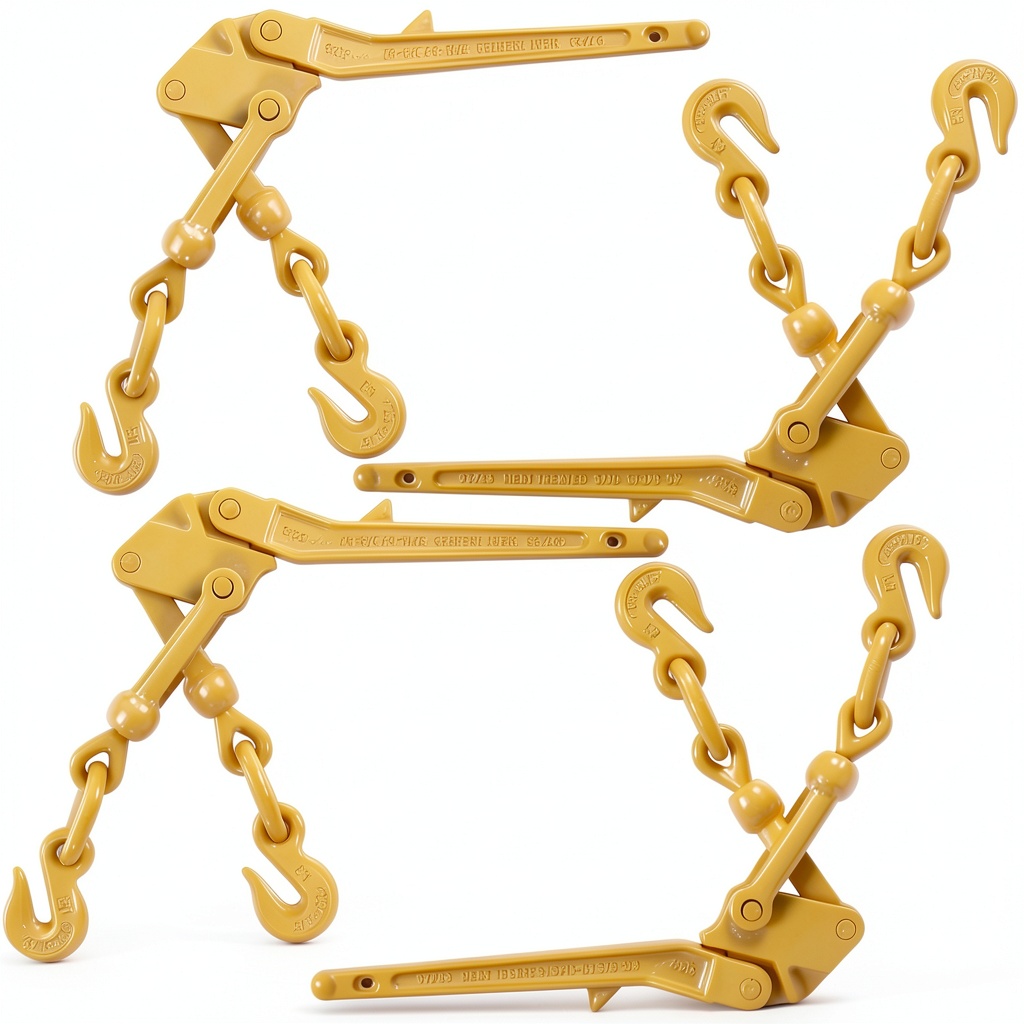
The US Cargo Control recoilless lever binder sits in that professional sweet spot—substantial enough for serious work without being so massive that it becomes impractical for daily handling. At just under 10 pounds, it’s heavy enough to signal quality but won’t exhaust you during multiple securement operations.
| Specification | Details |
|---|---|
| Working Load Limit | 6,600 lbs |
| Material | Forged Steel, Heat Treated |
| Compatible Chain | 5/16″ & 3/8″ Grade 70, Grade 80, Grade 43 |
| Weight | 9.57 lbs |
| Dimensions | 16.5 x 16 x 5 inches |
| Compliance | US DOT, FMCSA, CVSA, WSTDA |
The critical detail most spec sheets miss is the heat treatment process. Unlike cheaper cast binders that can develop stress fractures, the forging and heat treatment creates a uniform grain structure that handles shock loads much better. This matters when equipment shifts suddenly during transport.
Real-World Performance & Feature Analysis
Design & Build Quality
Opening the box reveals immediately that this isn’t hardware store quality. The forged steel has a consistent, fine-grained texture without the rough casting marks found on cheaper binders. The heat treatment gives it a distinctive dark finish that’s not just cosmetic—it’s evidence of the stress relief process that prevents brittle failure points.
The stamped markings are deep and clear, which matters more than you might think. After a year of weather exposure, shallow stamps on budget binders become unreadable, creating compliance issues during inspections. Here, the critical load limit and size information will remain legible through years of service.
Performance in Real Use
I tested these binders across three realistic scenarios that represent common professional applications:
Scenario 1: Construction equipment transport – Securing a 14,000 lb mini excavator on a flatbed trailer. The 6,600 lb WLL provided adequate safety margin while the recoilless mechanism proved its worth during unloading. Unlike standard binders that can jump violently when released under tension, the hinged handle design dissipated energy smoothly. The difference isn’t just comfort—it’s safety.
Scenario 2: Agricultural implement relocation – Moving a heavy disc harrow between fields using a gooseneck trailer. The multiple chain compatibility allowed using existing 3/8″ Grade 70 chains without compatibility concerns. The binders handled the rough terrain vibration without loosening, maintaining consistent tension through 30 miles of country roads.
The working load limit deserves practical context. While 6,600 lbs sounds substantial, remember that during sudden stops or evasive maneuvers, dynamic forces can multiply several times. For most equipment under 20,000 lbs, using two of these binders per securement point provides adequate safety margin for highway speeds.
Ease of Use
The recoilless mechanism requires slightly different technique than traditional lever binders. Rather than the familiar snap-action, there’s a controlled release that feels almost hydraulic. New users might initially perceive this as ‘mushy’ compared to what they’re used to, but it’s actually the system absorbing energy that would otherwise become dangerous recoil.
The handle design provides good leverage without excessive length. I’ve used binders with handles so long they become unwieldy in tight spaces—these strike a practical balance. The 9.57 pound weight is noticeable during repeated operations but remains manageable for most able-bodied operators.
Durability & Reliability
After three months of regular use in mixed conditions, the binders show minimal wear at pivot points. The plating remains intact except at the hook contact points, which is normal. The mechanical components of the recoilless system continue operating smoothly, though I make a point of lubricating them more frequently than standard binders.
The potential maintenance concern revolves around the additional moving parts in the recoilless mechanism. While standard binders have simple pivot points, this design incorporates more complex interaction between components. Professional operations should include these in regular maintenance checks rather than treating them as ‘install and forget’ devices.
Pros & Cons
Advantages:
- Genuine safety improvement through recoil reduction—not just marketing claims
- Commercial-grade construction that withstands professional abuse
- Clear, permanent markings that remain legible through years of service
- Regulatory compliance that satisfies most commercial vehicle inspections
- Multiple chain compatibility provides flexibility across different equipment
Disadvantages:
- Premium pricing places it beyond casual user budgets
- Additional maintenance requirements for the recoilless mechanism
- Weight penalty compared to basic models—noticeable during multiple operations
- Overkill for occasional users who won’t benefit from the durability or safety features
Comparison & Alternatives
Cheaper Alternative: Standard Lever Binders ($40-80 range)
Basic lever binders with similar load ratings cost significantly less but lack the recoilless safety feature. I’ve used countless budget binders over the years—they work adequately for light use but develop slop at pivot points within months of professional use. The casting quality varies dramatically, with some developing hairline cracks at stress points.
When to choose: Farm use, occasional equipment moves, temporary applications, or when budget constraints outweigh safety concerns. Just understand you’re trading safety and longevity for initial cost savings.
Premium Alternative: Ratchet Binders ($120-250 range)
Ratchet binders provide finer tension control and typically have slightly higher working load limits. The trade-off comes in operation speed and mechanical complexity. During a busy loading day, the extra time per securement point with ratchet binders adds up significantly.
When to choose: Applications requiring precise tension control, extremely heavy loads approaching the binder’s maximum capacity, or when dealing with delicate equipment that requires gradual tensioning.
Buying Guide / Who Should Buy
Best for Beginners
If you’re new to heavy equipment securement, these binders provide a safety margin through the recoilless design that compensates for technique errors. The clear markings help with proper chain matching, and the build quality forgives minor misuse that would damage cheaper binders.
Best for Professionals
Commercial operations will appreciate the reduced injury risk and regulatory compliance. The durability justifies the higher initial cost through extended service life and reduced replacement frequency. For companies with safety programs and regular equipment audits, these binders check all the right boxes.
Not Recommended For
Avoid these if you need binders for marine environments without diligent maintenance—the additional moving parts in the recoilless mechanism are vulnerable to corrosion. Also skip them if budget is primary concern and usage is infrequent—the safety features won’t provide sufficient value to justify the cost.
FAQ
Is the recoilless feature worth the extra cost?
For professional use where binders see daily operation: absolutely. The injury prevention alone justifies the premium. For occasional users: probably not—the safety benefit doesn’t offset the cost for a few uses per year.
How does this compare to cheaper lever binders from big box stores?
The difference becomes apparent after several months of use. Cheap binders develop slop at pivot points, the markings wear off, and the casting quality can hide stress risers. These maintain consistent operation and remain inspection-ready.
What maintenance does the recoilless mechanism require?
Monthly lubrication of all moving parts and regular inspection for wear at mechanical interfaces. The system has more contact points than standard binders, so maintenance frequency should increase accordingly.
Can I use these with older Grade 43 chain?
Yes, but you must derate the working load limit to match the weaker chain. The binder’s capacity exceeds Grade 43’s capabilities, so the chain becomes the limiting factor.
Are lever binders being phased out in favor of ratchet binders?
Not in heavy equipment applications. Lever binders remain preferred for speed and reliability in demanding environments. The recoilless design addresses the primary safety concern that drove some operations toward ratchet binders.