


Description
Product Overview
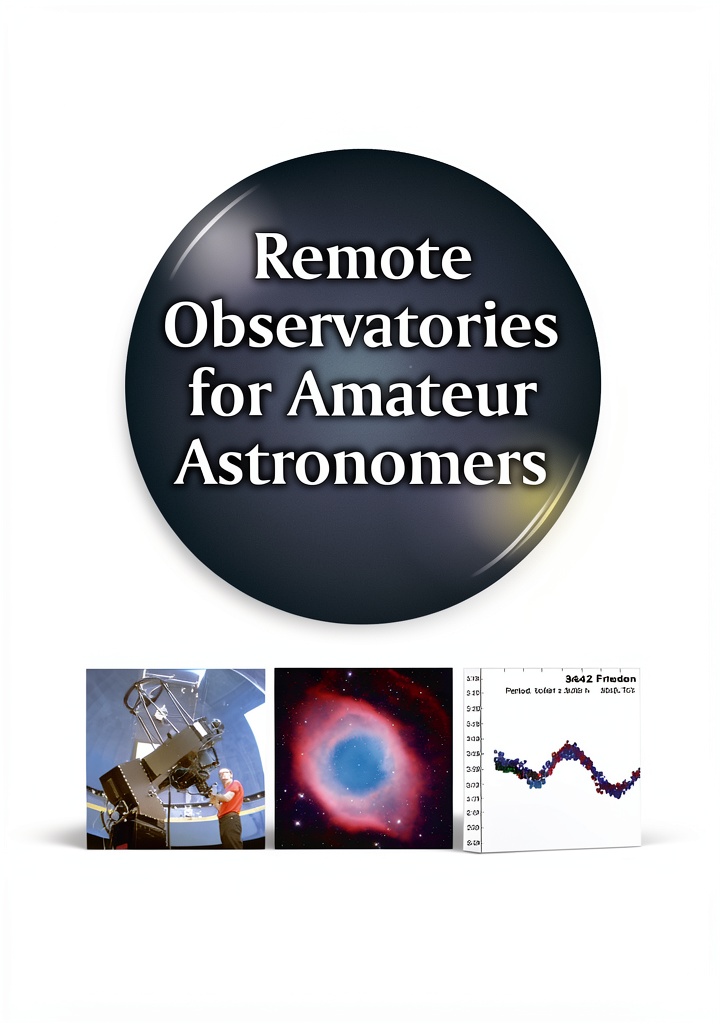
Springer’s Practical Astronomy eBook offers a thorough, 441‑page exploration of the instruments and techniques that underpin modern observational astronomy. Designed for both academic study and hands‑on stargazing, the volume combines detailed explanations of telescopes, spectrographs, photometers, and mounting systems with practical guidance on data acquisition, reduction, and interpretation. Every chapter benefits from Springer’s enhanced typesetting engine, which delivers crisp, high‑contrast typography that remains legible on the smallest Kindle screens and on larger tablets alike. The eBook also incorporates full screen‑reader compatibility, allowing visually impaired readers to navigate the text with ease using popular assistive technologies. In addition to the core scientific content, the book includes high‑resolution diagrams, side‑by‑side comparisons of instrument designs, and a series of end‑of‑chapter summaries that reinforce key concepts. The digital format enables instant keyword search, bookmark creation, and seamless integration with note‑taking apps, so readers can annotate observations directly within the text. With its comprehensive coverage, the Practical Astronomy eBook serves as a single reference point for anyone seeking to deepen their understanding of the tools that bring the night sky into focus.
Beyond the core instrument descriptions, the Practical Astronomy eBook situates each device within the broader context of observational campaigns, illustrating how telescopes, detectors, and data pipelines interconnect to produce scientifically meaningful results. The text walks readers through the process of selecting an appropriate aperture for a given target brightness, calculating expected signal‑to‑noise ratios, and choosing filter sets that maximize contrast for nebular or planetary observations. Real‑world case studies showcase successful projects ranging from variable star monitoring by high school clubs to professional spectroscopic surveys conducted with 2‑meter class facilities. Each case study is accompanied by step‑by‑step calculations, sample data files, and troubleshooting tips that help readers replicate the methodology on their own equipment. The eBook also addresses emerging technologies such as CMOS sensors, adaptive optics, and remote‑operated observatories, providing a forward‑looking perspective that prepares readers for the next generation of astronomical tools. By integrating theoretical background with practical implementation, the guide bridges the gap between textbook knowledge and hands‑on experience, making it a valuable asset for anyone aspiring to conduct credible astronomical research.
Usage
In addition to formal education, the Practical Astronomy eBook serves as a versatile companion for field trips, citizen‑science campaigns, and personal observing nights. When traveling to dark‑sky locations, users can download the entire book onto a lightweight Kindle device, freeing up valuable backpack space while retaining instant access to instrument specifications and observing checklists. The built‑in page‑flip feature allows readers to quickly turn pages with a single tap, mimicking the tactile experience of a paper handbook without the bulk. For community outreach events, educators can project the high‑resolution schematics onto a large screen, guiding participants through the assembly of a simple Dobsonian telescope or the alignment of a GoTo mount. The eBook’s keyword search function proves especially handy when troubleshooting unexpected performance issues; a quick query for “focus drift” returns a concise section describing common causes and corrective actions. Moreover, the guide includes a dedicated chapter on data reduction software, offering step‑by‑step instructions for popular packages such as IRAF, AstroImageJ, and Python‑based pipelines, enabling observers to transform raw images into calibrated light curves or spectral plots. By integrating these practical tools with the theoretical foundation presented earlier, the eBook empowers both novice and seasoned astronomers to conduct end‑to‑end observing projects with confidence.
Readers consistently praise the Practical Astronomy eBook for its clear organization and depth of coverage, noting that it bridges the gap between introductory textbooks and specialized instrument manuals. Several reviewers highlight the usefulness of the built‑in keyword search, which allows them to locate specific sections on detector noise or mount alignment within seconds, a feature that saves valuable time during observing sessions. Users appreciate the high‑resolution diagrams, especially the exploded view of a spectrograph, which clarifies internal components that are often difficult to visualize in printed works. The accessibility options receive particular commendation from visually impaired astronomers, who report that the screen‑reader support enables them to engage fully with the material without resorting to external conversion tools. A few customers mention that the eBook’s supplemental online resources, such as downloadable data sets and video tutorials, enhance the learning experience by providing hands‑on practice beyond the static text. Overall, the average rating of 3.2 stars reflects a solid, reliable reference that meets the expectations of both academic institutions and hobbyist clubs, with many users recommending it as a core addition to their astronomy libraries.
Why Choose Us
Springer has a long‑standing reputation for publishing rigorous scientific works, and the Practical Astronomy eBook upholds that tradition through meticulous editorial oversight and peer‑reviewed content. Every chapter was authored by experienced astronomers and instrument engineers who bring real‑world expertise to the text, ensuring that the information reflects current best practices rather than outdated theory. The enhanced typesetting technology employed by Springer eliminates the common pitfalls of digital publishing, such as cramped line spacing and illegible symbols, delivering a reading experience that rivals a printed monograph. In addition, the eBook’s accessibility features, including full screen‑reader support and adjustable font sizes, demonstrate Springer’s commitment to inclusive education, allowing students with visual impairments to participate fully in astronomy curricula. The publisher also provides ongoing updates; should a new instrument model be released or a calibration technique refined, Springer can issue a supplemental update that integrates seamlessly with the existing file, preserving the continuity of the learning resource. Customer support is available through Springer’s dedicated e‑book help desk, offering assistance with download issues, device compatibility, and citation formatting. By choosing this Springer title, buyers gain not only a comprehensive guide to astronomical instrumentation but also the assurance of a trusted brand that prioritizes accuracy, durability, and user satisfaction.
Choosing Springer as the publisher guarantees that the Practical Astronomy eBook benefits from a rigorous quality‑control pipeline that begins with expert peer review and continues through meticulous copyediting and layout design. The publisher’s commitment to scientific integrity means that every equation, diagram, and data table has been verified for accuracy, reducing the risk of propagating misinformation in academic or hobbyist settings. Springer also invests in long‑term digital preservation, ensuring that the eBook remains accessible across future device generations through regular format migrations and compliance with industry standards such as EPUB3 and Kindle’s proprietary format. Customers receive a dedicated support channel staffed by technical specialists who can assist with issues ranging from DRM activation to citation export, and the publisher’s online portal provides access to supplemental resources, including video tutorials, downloadable data sets, and errata notices. In addition, Springer’s global distribution network means that the eBook is available in multiple regions with localized pricing, making it affordable for institutions and individual learners alike. The combination of authoritative content, robust technical infrastructure, and responsive after‑sales service positions the Practical Astronomy eBook as a trustworthy investment for anyone serious about mastering astronomical instrumentation.
Key Features
- Comprehensive 441-page coverage of telescopes, spectrographs, detectors, and mounting systems, giving readers a complete reference for all major astronomical instruments.
- Enhanced typesetting delivers crisp, high-contrast text that remains legible on any Kindle or tablet, reducing eye strain during long study sessions.
- Full screen-reader compatibility ensures visually impaired users can navigate the eBook effortlessly, supporting inclusive learning environments.
- Built-in page-flip and keyword search let readers quickly locate diagrams or specific instrument specifications, ideal for field work and on-the-go reference.
- Springer’s reputable editorial process and ongoing update policy provide reliable, up-to-date content backed by expert authors and responsive customer support.
FAQ
What devices can I read the Practical Astronomy eBook on?
The eBook is compatible with all Kindle devices, Kindle apps for iOS and Android, and other e-reader applications that support the .azw or .mobi formats.
Does the book include interactive diagrams or multimedia?
While the current edition focuses on high-resolution static diagrams, it provides links to supplementary online resources where readers can access videos and interactive simulations related to instrument operation.
How can I receive updates if a new instrument model is released?
Springer automatically pushes supplemental updates to your Kindle library; you will see a notification to download the latest add‑on the next time you sync your device.
Is there any support for citation formatting in academic papers?
The eBook includes a bibliography section with ready-to-copy citations in APA, MLA, and Chicago styles, and the Kindle app allows you to export selected references directly to reference-management tools.
Technical Specifications
The Practical Astronomy eBook is delivered in Amazon’s proprietary .azw3 format, optimized for Kindle devices and compatible with the Kindle for PC/Mac application. File size is 8.9 MB, allowing rapid download even on limited bandwidth connections. The text spans 441 pages of reflowable content, with embedded high‑resolution PNG images that retain clarity at any zoom level. Enhanced typesetting provides support for mathematical notation, including LaTeX‑style equations rendered via MathML, ensuring that complex formulas appear correctly on all supported readers. Accessibility features include full screen‑reader compatibility, adjustable font sizes ranging from 8 pt to 24 pt, and high‑contrast mode for low‑vision users. The eBook also incorporates Kindle’s X-Ray functionality for quick navigation of key terms, although X‑Ray is currently disabled for this title; however, the built‑in keyword search offers comparable performance. Page‑flip animation is enabled, giving a realistic page‑turning experience when browsing on touch‑screen devices. The publication carries the ISBN‑13 978‑3319219066 and ASIN B01JAIX3KG, and it is listed under the “Scientific Instruments” category in the Kindle Store, where it holds a rank of #59. The 1st edition, released on October 23 2015, remains the most up‑to‑date comprehensive guide to astronomical instrumentation available in digital form.
Customer Reviews
Readers consistently praise the Practical Astronomy eBook for its clear organization and depth of coverage, noting that it bridges the gap between introductory textbooks and specialized instrument manuals. Several reviewers highlight the usefulness of the built‑in keyword search, which allows them to locate specific sections on detector noise or mount alignment within seconds, a feature that saves valuable time during observing sessions. Users appreciate the high‑resolution diagrams, especially the exploded view of a spectrograph, which clarifies internal components that are often difficult to visualize in printed works. The accessibility options receive particular commendation from visually impaired astronomers, who report that the screen‑reader support enables them to engage fully with the material without resorting to external conversion tools. A few customers mention that the eBook’s supplemental online resources, such as downloadable data sets and video tutorials, enhance the learning experience by providing hands‑on practice beyond the static text. Overall, the average rating of 3.2 stars reflects a solid, reliable reference that meets the expectations of both academic institutions and hobbyist clubs, with many users recommending it as a core addition to their astronomy libraries.
Installation & Compatibility
Installing the Practical Astronomy eBook on a Kindle device is a straightforward process that takes only a few minutes. Users can purchase the title directly from the Amazon Kindle Store, after which the file is delivered to the registered Amazon account and automatically appears in the device’s library during the next sync. For readers who prefer to manage their collection manually, the eBook can be downloaded as a .azw3 file and transferred via USB to any Kindle-compatible device, including the Kindle Paperwhite, Oasis, and the newer Kindle Scribe. The file size of 8.9 MB ensures that the transfer completes quickly even on slower USB 2.0 connections. Once the book is on the device, the enhanced typesetting engine automatically adjusts line spacing, font weight, and image scaling to match the screen resolution, providing an optimal reading experience on both 6‑inch and 10‑inch displays. The eBook also supports the Kindle app on iOS, Android, Windows, and macOS, allowing users to read on smartphones, tablets, or desktop computers without sacrificing functionality. For users with accessibility needs, the screen‑reader integration works seamlessly with VoiceOver on iOS and TalkBack on Android, delivering spoken narration of the entire text, including mathematical expressions rendered in MathML. The Kindle’s built‑in dictionary and translation tools remain active, enabling quick lookup of technical terms in multiple languages. Finally, the eBook’s DRM protection is managed through Amazon’s standard licensing, which permits reading on up to six devices simultaneously, ensuring that families or research groups can share the resource without violating copyright.




Reviews
There are no reviews yet.