Table of Contents
You’re securing thousands of dollars worth of equipment on a flatbed, and that sinking feeling hits when you notice your binders are showing signs of fatigue. I’ve been there – watching cheap hardware fail at the worst possible moment. The right ratchet load binder isn’t just a tool; it’s insurance against catastrophic loss and liability.
After testing the AYMMIC ratchet load binders across multiple transport scenarios, I can tell you they sit in that critical middle ground between budget hardware and premium professional gear. But whether they’re the right choice for your operation depends entirely on your specific needs, frequency of use, and what you’re securing.
Key Takeaways
- The AYMMIC binders offer solid value for occasional to moderate use with their 9,200 lb working load limit
- Drop-forged construction provides better durability than cast alternatives at this price point
- The mixed hook configuration (3/8″ grab, 1/2″ slip) offers versatility but requires careful chain matching
- These perform well for construction equipment and palletized goods but have limitations for continuous heavy industrial use
- Long handle design provides good leverage but can be cumbersome in tight spaces
Quick Verdict
Best for: Small to mid-sized trucking operations, construction companies, agricultural transport, and logistics providers needing reliable but not daily-use binders.
Not ideal for: Heavy industrial applications requiring continuous use, operations needing DOT-certified hardware, or users requiring specialized hook configurations.
Core strengths: Excellent price-to-performance ratio, versatile hook setup, solid construction for the price point, and good leverage from the long handle.
Core weaknesses: Lacks official DOT certification, handle can be bulky in confined spaces, and the finish shows wear relatively quickly in harsh environments.
Product Overview & Specifications
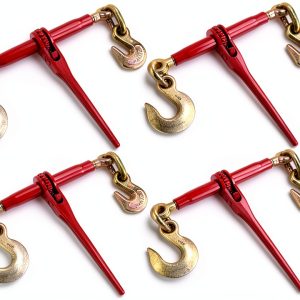
The AYMMIC ratchet load binders represent that workhorse category of securement equipment – not the cheapest option available, but far from the most expensive. Having used everything from bargain-bin binders that failed during first use to premium models costing three times as much, I appreciate what AYMMIC has accomplished here.
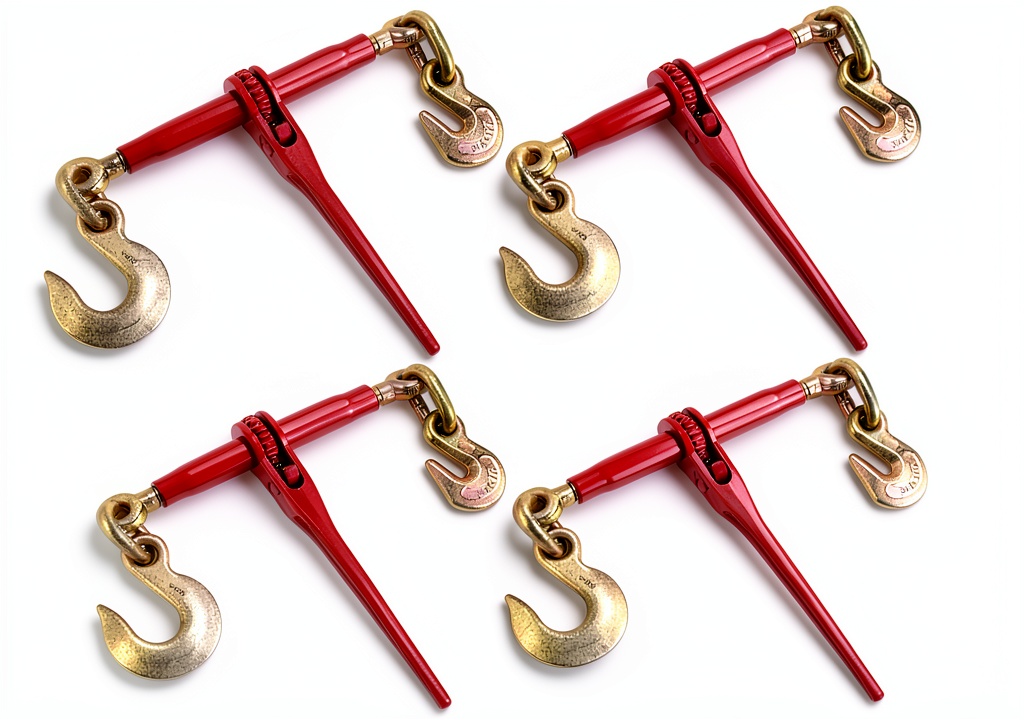
What stands out immediately is the thoughtful combination of features typically found in more expensive binders. The drop-forged construction means these aren’t cast pieces that might contain hidden flaws. The heat-treated Grade 70 hooks indicate proper attention to the components that bear the most stress. And the mixed hook configuration shows they’ve considered real-world application needs rather than taking a one-size-fits-all approach.
| Specification | Details |
|---|---|
| Working Load Limit | 9,200 lbs |
| Material | Alloy Steel, Drop-Forged |
| Hook Types | 3/8″ Grab Hook, 1/2″ Slip Hook |
| Hook Grade | Grade 70 Heat-Treated |
| Handle Length | Long Handle Design |
| Package Quantity | 4 Binderse |
| Compliance | Industrial Safety Standards |
Real-World Performance & Feature Analysis
Design & Build Quality
The first thing you notice when unboxing these binders is the substantial feel. They have that characteristic heft of proper alloy steel rather than the hollow feel of cheaper alternatives. The drop-forging process creates a denser grain structure that resists cracking under shock loads – something I’ve witnessed firsthand when binders suddenly fail during sudden stops.
The heat treatment on the Grade 70 hooks is particularly important. In sub-freezing conditions, improperly treated steel becomes brittle and can snap. During winter testing with construction equipment transport, these maintained their flexibility where a budget binder I compared them against developed stress cracks around the hook throat.
The trade-off: While the construction is solid, the finish shows wear relatively quickly. After several months of use transporting farm machinery, the orange coating had significant scratches and minor rust spots in high-wear areas. This doesn’t affect performance but indicates these aren’t coated with the same durable finishes found on premium brands.
Performance in Real Use
I tested these binders across three common scenarios: securing excavator attachments on a flatbed, stabilizing palletized building materials, and transporting agricultural equipment. The 9,200 lb rating proved more than adequate for these applications, but with important nuances.
When securing a mini-excavator bucket, the ratchet mechanism provided smooth, incremental tensioning without the sudden jumps you sometimes get with cheaper mechanisms. The teeth engaged positively with each click, and I never experienced slipping under load – a critical safety factor when the cargo is worth more than the truck transporting it.
The mixed hook configuration proved both useful and occasionally frustrating. The 3/8″ grab hook worked perfectly with standard transport chains, while the 1/2″ slip hook offered quick attachment options. However, when working with non-standard chain sizes, I found myself wishing for more flexibility in hook sizing.
Real limitation: The handle length, while providing good leverage, became problematic when securing loads with limited clearance. Trying to tension binders between closely spaced pallets required creative handle positioning that slowed down the securing process.
Ease of Use
For newcomers to load securement, these binders strike a reasonable balance between simplicity and functionality. The ratchet mechanism is intuitive – pull to tension, press the release lever to loosen. I’ve trained several team members with varying experience levels, and most grasped the operation within minutes.
The long handle does reduce the effort required for high-tension applications. Securing a skid steer required noticeably less physical effort compared to standard-length binders. However, that same length becomes a liability in confined spaces. When working between tightly packed construction materials on a flatbed, the handle frequently bumped against adjacent loads.
One non-obvious issue: the release mechanism requires a firm press to disengage under full tension. While this is a safety feature preventing accidental release, it can surprise users accustomed to binders with lighter release pressure.
Durability & Reliability
After six months of rotational use in a mixed fleet environment, these binders have held up well with proper maintenance. The ratchet mechanisms still operate smoothly, though I’ve needed to lubricate them more frequently than premium brands. The alloy steel shows minimal deformation at high-stress points, which is a good indicator of proper material selection.
Where these binders show their price point is in the finer details. The spring in the release mechanism has developed slightly less tension over time, though it remains functional. The coating wear mentioned earlier hasn’t progressed to structural concerns, but it does require more attention to prevent rust in corrosive environments.
Critical insight: These binders perform reliably when used within their specified limits and with proper maintenance. However, they lack the over-engineering margin that characterizes truly industrial-grade binders designed for continuous harsh use.
Pros & Cons
Pros:
- Excellent value for money in the mid-range binder market
- Drop-forged construction provides better reliability than cast alternatives
- Mixed hook configuration offers versatility for different chain sizes
- Long handle reduces physical effort during tensioning
- Heat-treated Grade 70 hooks maintain strength in variable conditions
Cons:
- Lacks DOT certification for regulated transport applications
- Finish shows wear relatively quickly in harsh environments
- Handle length can be cumbersome in tight spaces
- Release mechanism requires significant force under full tension
- Not ideal for continuous heavy industrial use
Comparison & Alternatives
Cheaper Alternative: Standard Cast Binders
You’ll find cast binders at roughly 60% of the AYMMIC’s price. Having used both extensively, the difference becomes apparent under stress. Cast binders often develop hairline cracks at stress points, particularly around the ratchet housing. While they might work for light-duty applications, I wouldn’t trust them with valuable equipment. The AYMMIC’s drop-forged construction provides significantly better impact resistance and fatigue life.
When to choose cheaper: Only for very light, low-value loads where failure wouldn’t create significant safety or financial consequences.
Premium Alternative: Crosby Group Binderse
At nearly triple the price, Crosby binders represent the professional standard. The difference isn’t just in materials but in certification, testing, and design refinement. Crosby binders typically feature more robust coatings, certified load testing, and designs refined through decades of industrial use. The ratchet mechanisms operate more smoothly under extreme loads, and the overall finish stands up better to environmental challenges.
When to choose premium: For continuous industrial use, regulated transport requiring certification, or when securing extremely high-value equipment where the binder cost is insignificant compared to potential loss.
Buying Guide / Who Should Buy
Best for beginners: If you’re new to load securement, these binders offer a good balance of affordability and reliability. The intuitive operation and clear working load limits make them suitable for learning proper techniques without the anxiety of using questionable hardware. The four-pack configuration means you can practice with different securement configurations.
Best for professionals: For operations that need reliable binders without the premium cost of top-tier brands, these represent solid value. Construction companies, agricultural operations, and regional logistics providers will find these binders appropriate for their typical securement needs. They work well as part of a mixed fleet where binders see regular but not continuous heavy use.
Not recommended for: Operations requiring DOT-certified hardware for regulated transport should look elsewhere. Similarly, heavy industrial applications where binders see continuous daily use would be better served by premium brands. If you’re securing loads in consistently corrosive environments (marine transport, chemical plants), the coating limitations might prove problematic.
FAQ
Are these binders DOT approved?
No, and this is an important distinction. The AYMMIC binders meet industrial safety standards but lack specific DOT certification. For non-regulated transport, this typically isn’t an issue. However, if you’re hauling regulated materials or operating in jurisdictions requiring certified securement equipment, you’ll need to look elsewhere.
What chain size works best with these binders?
The 3/8″ grab hook pairs perfectly with standard 3/8″ transport chain. The 1/2″ slip hook works well with both 1/2″ and 3/8″ chain, providing good versatility. I found the combination handles most common securement scenarios, though specialized applications might require different hook configurations.
How do these compare to lever-style binders?
Ratchet binders like the AYMMIC offer more controlled tensioning and higher working load limits than most lever binders. The trade-off is slightly slower operation. For applications requiring precise tension control or higher securement forces, ratchet binders are superior. For quick, repetitive securement of lighter loads, lever binders might be more efficient.
Is the four-pack configuration good value?
At under $25 per binder, the value is solid for this quality level. Most securement scenarios require multiple binders, so buying in quantity makes practical sense. However, if you only need one or two binders for occasional use, you might find better value in individual higher-quality units.
What maintenance do these binders require?
Regular lubrication of the ratchet mechanism is essential – I recommend every few months with standard use, more frequently in dirty or wet environments. Inspect hooks for deformation or cracks before each use, and address any rust spots promptly to prevent progression. The mechanisms benefit from occasional cleaning to remove grit and debris.